

The idea of cooperation between Turkic peoples and the establishment and deepening of cultural and political relations is not a new concept on the international stage. The role of Hungarian Oriental studies in this process – especially in the development of Turkology as a discipline – is also relatively well known. Another issue – and one that is perhaps less talked about today – is that Hungarian interest in the Turkic world was primarily linked to unresolved questions of national identity, rather than some kind of unquenchable desire for Hungary to be part of the Turkic world. At the same time, the current political environment has always influenced the image Hungarians have of their eastern relations. While Vámbéry’s travels and scientific activities in Central Asia attracted considerable interest both at home and in the West, the political “mood” changed significantly after 1945, only for the wildest of Eastern affinities to regain strength after 1990.
In addition, it is also a valid question, that a given scientific or science policy achievement is in the interest of a particular community or not? For example, Vámbéry is portrayed very positively in British sources, since, in addition to his indisputable scientific achievements, during the 19th-century “Great Game,” any interpretation that strengthened the British presence in Central Asia was warmly welcomed in London. It is also no coincidence that pro-Russian circles did a great effort to discredit the scientific achievements of the Hungarian orientalist (Mandler Dávid: Kelet és Nyugat mezsgyéjén. Vámbéry és a Brit Birodalom. Múlt és Jövő Kiadó, Budapest, 2014).
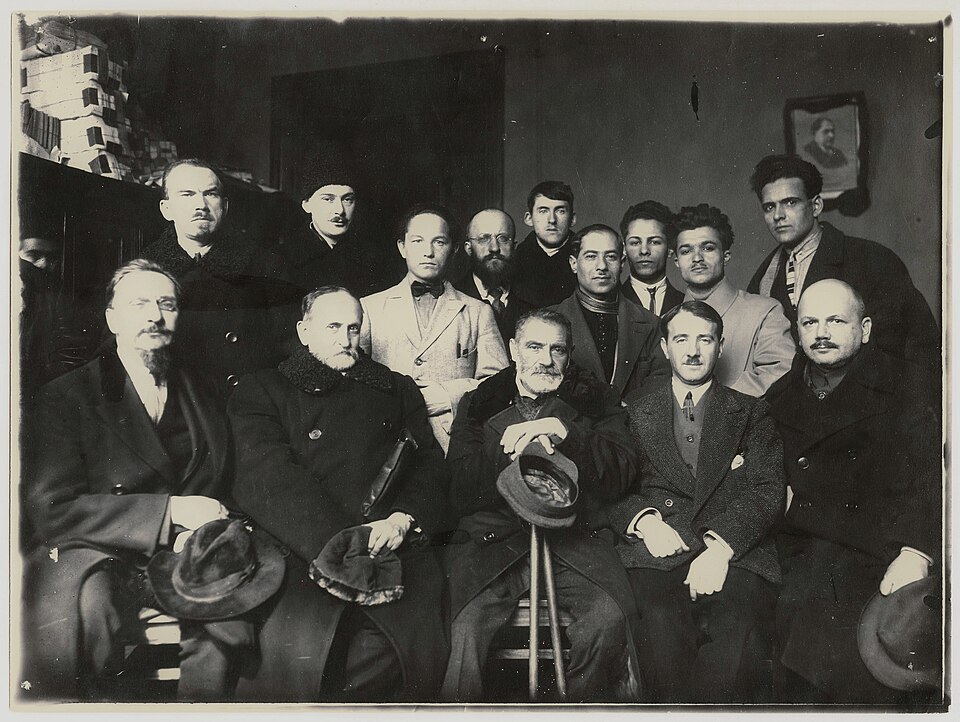
However, staying grounded in reality, we would like to draw attention to the Hungarian aspects of the First Turkology Congress held in Baku in 1926. The issue is relevant because next year marks the centenary of this initiative, and it also has well-documented Hungarian connections.
At the time of the First Turkology Congress in 1926, Paul Wittek, Theodor Menzel, Vasily V. Barthold, and Gyula Mészáros represented the group of non-Turkish Turkologists from Istanbul who had been sent to Baku by the Ankara government. One of the most important issues at the Baku congress was the transition of Turkish languages to the Latin alphabet. The role of Hungarian scholarship in this matter cannot be overlooked, as Zoltán Gombocz, for example, explicitly supported the Latin alphabet. Before the 1928 language reform in Türkiye, Mustafa Kemal studied the Hungarian alphabet and consulted with Mészáros on the issue, in addition to Ali Hüseyinzade, Fuat Köprülü, and the above mentioned Menzel.
However, Mészáros’s life was marked by significant twists and turns, as he was arrested in Vienna in 1921 for his involvement in the so called Frank affair, although he was eventually released on bail. Mészáros did not wait for the conclusion of his case, which caused a great media stir and political scandal at that time, but instead of making a statement, he left the country and fled to Turkey. The choice of his destination could not have been accidental, as the Turkish and Turkic world was by no means unfamiliar to him. From 1904, he studied in the Ottoman capital for two years, and from 1916, he gave lessonst at Darülfünun, the present Istanbul University. According to our sources, Mészáros (and his wife) caused a lot of headaches for the Hungarian diplomatic mission in Türkiye. The French government pulled out all the stops in Turkey to promote the extradition of the university professor. According to the report of Hungarian ambassador László Tahy, the Turkish authorities—through the mediation of Hüsrev Gerede, the Turkish ambassador in Budapest—showed understanding for the „patriotic irredentist enterprise”, but the Hungarian scholar was nevertheless removed from his university position. In addition to all this, the Congress provided a good opportunity for Mészáros to gain time, as it allowed him to remain in the Soviet Union until April.
The Hungarian ethnographer and Turkologist chose a topic for the conference – traces of the Anatolian presence of Turkish tribes – that perfectly matched the cultural policy ideas of the new Turkish Republic at the time.
It is perhaps no coincidence that the Hungarian scholar also played an important role in the establishment of the Türk Tarih Kurumu and the Türk Dil Kurumu in Türkiye, as well as the institutional foundations of Turkish ethnography.
In connection with next year’s centenary, it is worth emphasizing once again Mészáros’s former role and the fact that it is our responsibility to identify and enrich the points of connection between Hungary and the Turkic nations.
Image source: https://edebiyyatqazeti.az/news/sience/10165-birinci-turkoloji-qurultay
