

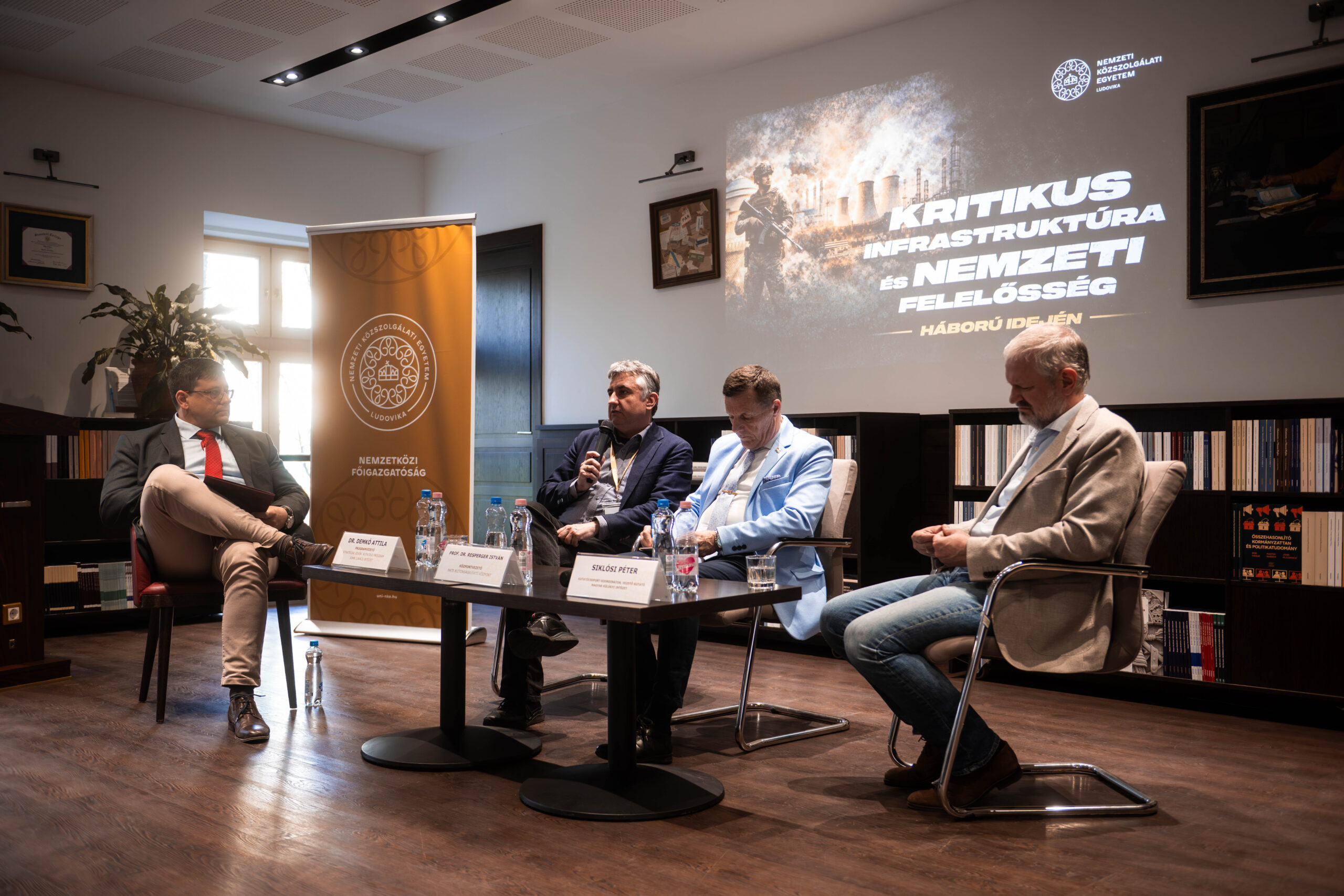
On 18 March, the Ludovika University of Public Service hosted a panel discussion titled “Critical Infrastructure and National Responsibility in Times of War” featuring Attila Demkó, István Resperger, and Péter Siklósi. The event focused on the protection of critical infrastructure, the transformation of the European security environment, Hungary’s preparedness and the broader implications of ongoing geopolitical tensions.
The discussion offered an in-depth assessment of the evolving security landscape, highlighting that contemporary conflicts increasingly combine conventional military operations with hybrid methods aimed at disrupting critical infrastructure and weakening state resilience. Speakers noted that the war in Ukraine has clearly demonstrated how attacks on such systems can have wide-ranging military, economic, and societal consequences. In his opening remarks, László Vasa pointed to the growing importance of protecting critical infrastructure, adding that modern conflicts often rely on hybrid methods targeting essential systems and societal resilience.

The panel also examined broader global security dynamics, including the rising number of parallel conflicts worldwide and intensifying competition between major powers. Alongside the war in Ukraine, speakers referred to crises in other regions. The discussion further highlighted the continued relevance of nuclear deterrence, while noting that the international security environment is undergoing rapid transformation and becoming increasingly complex. Panelists underlined that strengthening defense capacities, improving resilience against hybrid threats, and enhancing the protection of critical infrastructure have become key priorities. Hungary’s preparedness was discussed in relation to both its alliance commitments within NATO and the European Union and the importance of maintaining strong national capabilities, including developments in the defense industry and military modernization.
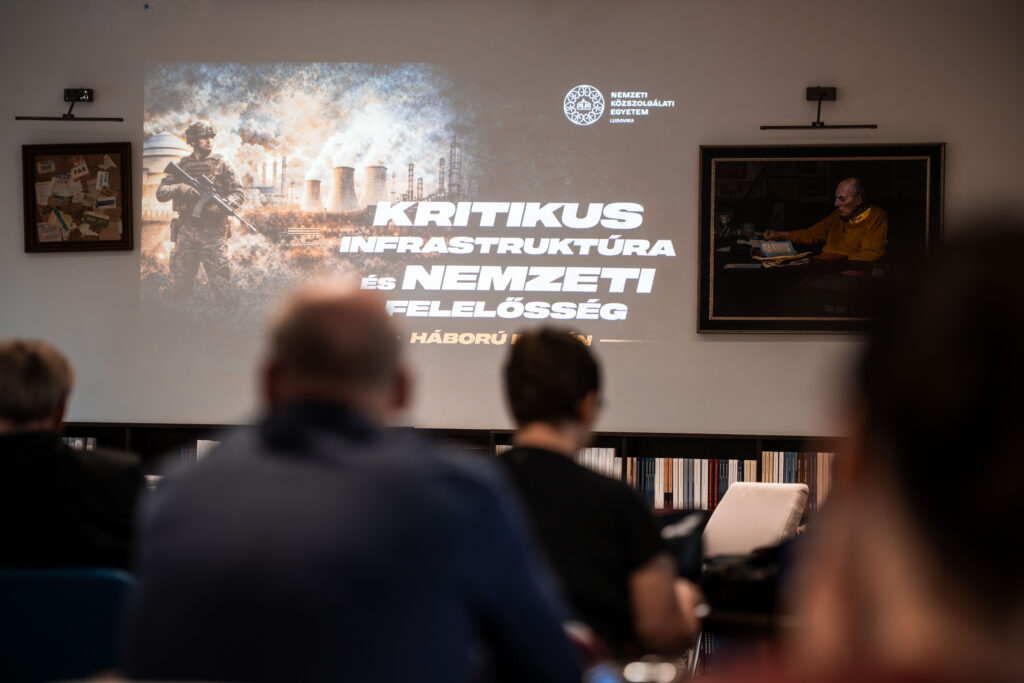
The discussion concluded with reflections on Hungarian–Ukrainian relations. The speakers noted that trust between the two countries has significantly eroded in recent years, making the restoration of constructive cooperation increasingly complex. Overall, the panel concluded that safeguarding critical infrastructure, strengthening societal resilience, and adapting to emerging security challenges will remain central tasks for Hungary and Europe in the coming years.
Photos: Dénes Szilágyi
