

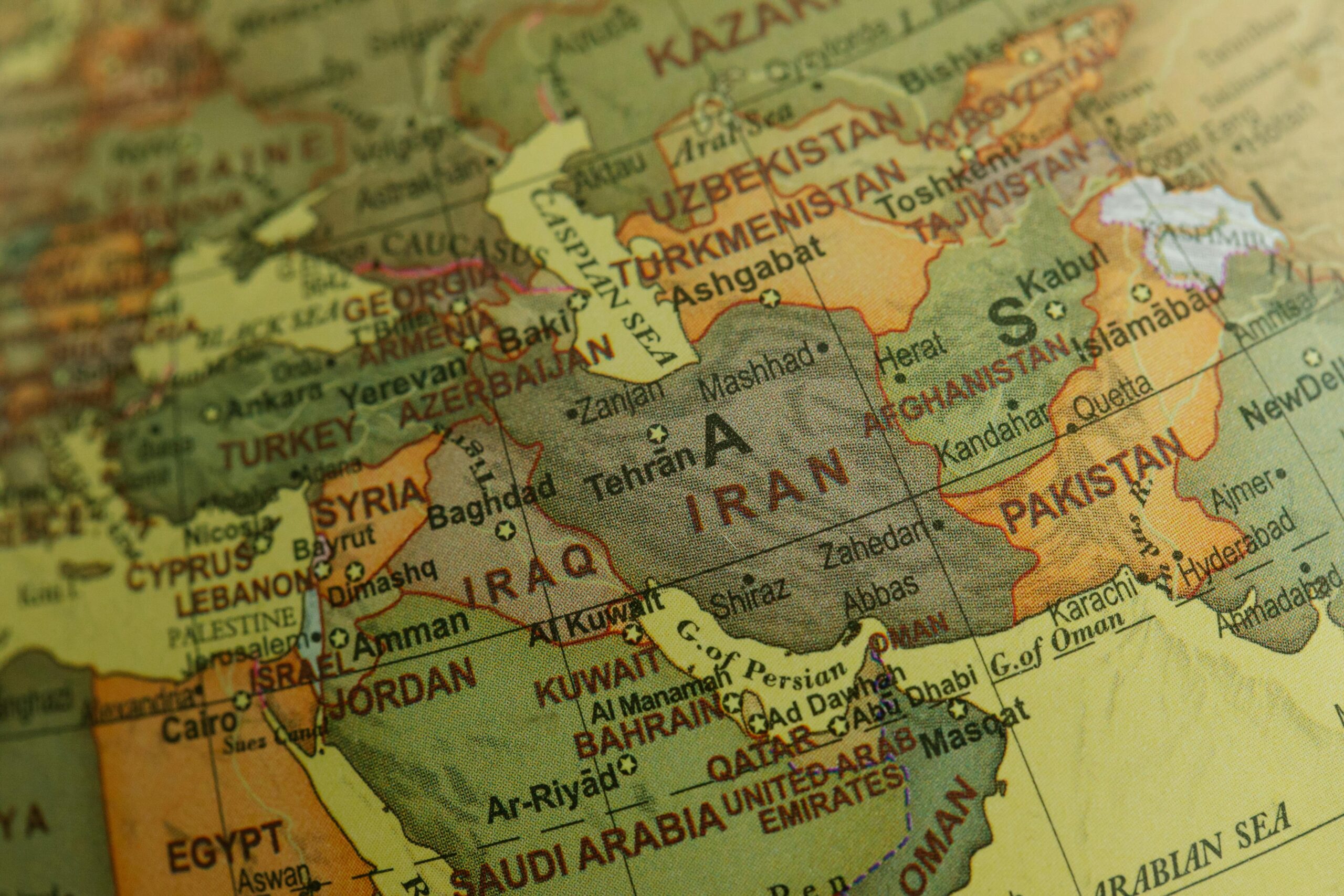
Türkiye’s Worst Case Scenario Becomes Real
From Ankara’s point of view however, the US-Israeli air campaign against Iran is not a victory of deterrence but the realization of a strategic nightmare which it had tried so hard to prevent. As American and Israeli aircraft rain down on targets all across Iran, President Recep Tayyip Erdoğan government has drawn a clear line: Türkiye does not support this intervention, it is afraid of the destabilisation it will unleash, and it will not be a party to this intervention. That stance is not some reflexive defence of the Islamic Republic. It is the result of a decade of bitter lessons learned about regime-change wars, the geography of Turkish vulnerability, and Ankara’s own ambition to be a regional power broker rather than someone else’s forward operating base. The scale of what is unfolding on Türkiye’s eastern frontier is difficult to understate. In a joint operation, initiated on 28 February, Israel and the United States began massive strikes on Iranian cities and military infrastructure, aimed at destroying missile and air-defence assets, decapitating the leadership and, in President Donald Trump’s own words, opening the way for Iranians to “take over their government”.[1]
Early talk already includes the killing of Supreme Leader Ali Khamenei and senior commanders, waves of Iranian missile and drone retaliation across the Gulf, and the closing of the Strait of Hormuz with all the economic shock that entails. This is not a pin-prick raid, it is the first stage of a war with regime change an expressed goal. [2]
Why Ankara Said No to Supporting Intervention
Long before the first bomb fell, Ankara had indicated that this was exactly the scenario it wished to avoid. As protests and brutal repression engulfed Iran in late 2025 and early 2026, Turkish officials openly admitted that many of the Iranian grievances were legitimate but cautioned against any foreign effort to instrumentalise the unrest. Foreign Minister Hakan Fidan said in mid-January that Türkiye is “against a military intervention against Iran”, and insisted that Iran should solve its own internal problems “on its own”, and that Ankara’s priority was to ensure that destabilisation is avoided. Behind the scenes Turkish diplomats shuttled between Tehran, Western capitals and Gulf states arguing against an American military option and in favour of renewed nuclear talks. [3]
That opposition to intervention stiffened when Washington’s armada set sail for the region, and leaks of intelligence indicated that large-scale strikes on Iran were seriously contemplated. In late February, a high-level Turkish diplomatic official informed Reuters that Ankara was reviewing contingency plans in the event of war, including measures to secure the safety of Turkish citizens and handle possible refugee flows, but that any action that would “breach Iran’s sovereignty” was being ruled out.
The disinformation office of the presidency went as far as to publicly debunk rumours that Türkiye was preparing to move into Iranian territory to establish a buffer zone, keen to signal to Tehran and to its own domestic audience that it would not replay the role of launchpad that northern Iraq played in 2003. [4] After the strikes started, the rhetoric from Erdoğan was clear. In a televised address he said Türkiye was “deeply disturbed” by the American-Israeli attacks on its “friend and brother” Iran and denounced them as a clear violation of Iranian sovereignty even as he also denounced Tehran’s retaliatory missile salvos against Gulf states as “unacceptable, regardless of the reason”. This dual condemnation is not a contradiction, it is a deliberate posture. Ankara wants to portray itself as a principled foe of cross-border adventurism as well as a detached foe of escalating retaliation in a way that makes Türkiye the adult in a room full of impulsive actors. Erdoğan stressed that the 500-kilometre border between Türkiye and Iran was peaceful and that security forces were taking all the necessary precautions, a sign both of control at home and distance from the war effort.
Other senior officials echoed and whetted this line. Communications chief Burhanettin Duran said the situation following the joint US-Israeli attack was a “direct armed conflict” that was “unacceptable” and threatened not just the belligerents, but “stability and the safety of civilians across a wide region”. The Foreign Ministry warned that the escalation “puts the future of our region and global stability at risk”, demanded an immediate halt to hostilities and explicitly offered Türkiye’s services as a mediator.[5] Ankara has also publicly denied reports that the strikes had been aided by the targeting support of military aircraft in the Turkish capital, Konya, provided by the NATO, anxious not to give the impression that it is quietly supporting a war it opposes.
Lessons From Syria and Iraq
To see why Türkiye has resisted calling for intervention – and how it is so alarmed now – it’s important to look beyond the day-to-day statements to the underlying logic to Türkiye’s Iran policy. Ankara’s views of the Islamic Republic have always been ambivalent: Iran is a rival in Syria and Iraq, the sponsor of groups hostile to Turkish interests, and a potential nuclear proliferator. Yet it is also a crucial energy supplier, important trade partner and, perhaps most importantly, a huge state whose disintegration could release forces much more dangerous to Türkiye than the current regime. A detailed analysis that the Washington Institute produced in 2025 summarized the essence of this thinking. Türkiye, it argued, has a “strong national security interest in avoiding moves that result in either direct Turkish hostilities with Iran or collapse of the Islamic Republic”.
Ankara abhors the idea of a nuclear-armed Iran but it is almost certain to oppose “massive Israeli military intervention” against Iran’s nuclear programme because such an operation runs the risk of state failure on its borders. Turkish strategists are concerned about the creation of a power vacuum in western Iran that Kurdish militants, especially some elements associated with the PKK, might exploit to create new sanctuaries to replicate the pattern observed in northern Iraq and parts of Syria, following earlier US-led interventions. For a government which defines the PKK as the number one existential threat, that scenario is un-acceptable. There is also the precedent of the Syrian. For the better part of a decade, Türkiye has lived with consequences of state fragmentation to its south: millions of refugees, a heavily militarised border and a patchwork of non-state armed actors operating with varying degrees of hostility to Ankara. [7]
Few in the Turkish security establishment enjoy the prospect of recreating that experience along the Iranian frontier, especially at a time when Türkiye’s own economy is still weak and Turkish society exhausted by the costs of long conflict. An Iran torn apart by war and sanctions but not yet rebuilt would send refugees and smuggling networks through Van and Hakkari, disrupt the cross border trade and undercut Türkiye’s ambition to be an energy centre between East and West.
Between Tehran and Washington: A balancing act
At the same time, the scope for manoeuvre of Ankara is not unlimited. Türkiye is still a member of the alliance, and cannot fully extricate themselves from alliance decisions, and US pressure – diplomatic, economic, even military – will increase if the conflict drags on. The reported use of the NATO “AWACS” aircraft to conduct some form of regional surveillance, even if Türkiye characterizes the operation as having no involvement, shows just how easy it is to be implicated by geography alone. Moreover, Ankara really is not interested in seeing Iran’s nuclear and missile programmes restored and expanded. It will likely be supportive, and perhaps help design, tougher non-military measures against whatever leadership emerges in Tehran when the dust settles, as it has been willing to enforce, and sometimes skirt, sanctions when it suited Turkish interests in the past. [6]
The result is a characteristically Turkish position: against the invasion, suspicious of Iran, but also determined to make a crisis into a diplomatic opportunity. Ankara will work to keep channels open with all sides – Washington, Tehran, Gulf capitals and Israel itself – not out of idealism but out of a hard-headed calculation that whoever can mediate, can also shape the post-war order. As put by Erdoğan in the first hours of the bombing, Türkiye “worked hard for a long time to resolve the conflicts at the negotiating table” and now intends to “accelerate” those efforts. Whether anybody is still listening in Washington or Jerusalem is another question.
For now, Türkiye’s position on the invasion is clear: no endorsement, no participation, no enthusiasm for a war whose consequences it will feel more acutely than any other of the US’s allies in the NATO. Ankara is betting on principled opposition to military intervention and pragmatic engagement on sanctions and diplomacy to weather the storm and emerge as an indispensable regional interlocutor. If the campaign against Iran gets out of hand and becomes a protracted war or a state collapse, that bet may prove optimistic. But given its history, geography and domestic constraints it is difficult to envisage any other course that Türkiye could have chosen. If the war drags on, Ankara could step in as a mediator.
References
[1] https://www.aa.com.tr/en/turkiye/turkish-communications-chief-condemns-direct-armed-conflict-after-joint-us-israel-attack-on-iran/3843864
[2] https://edition.cnn.com/2026/02/28/middleeast/israel-attack-iran-intl-hnk
[3] https://www.reuters.com/world/middle-east/turkey-says-it-opposes-military-intervention-iran-priority-is-avoiding-2026-01-15/
[4] https://www.reuters.com/world/middle-east/turkey-evaluating-potential-measures-event-iran-us-conflict-source-says-2026-02-25/
[5] https://www.washingtoninstitute.org/policy-analysis/how-turkey-views-iran-israel-confrontation
[6] https://www.aa.com.tr/en/turkiye/turkish-communications-chief-condemns-direct-armed-conflict-after-joint-us-israel-attack-on-iran/3843864
[7]. https://www.washingtoninstitute.org/policy-analysis/how-turkey-views-iran-israel-confrontation
Image source: Pexels
