

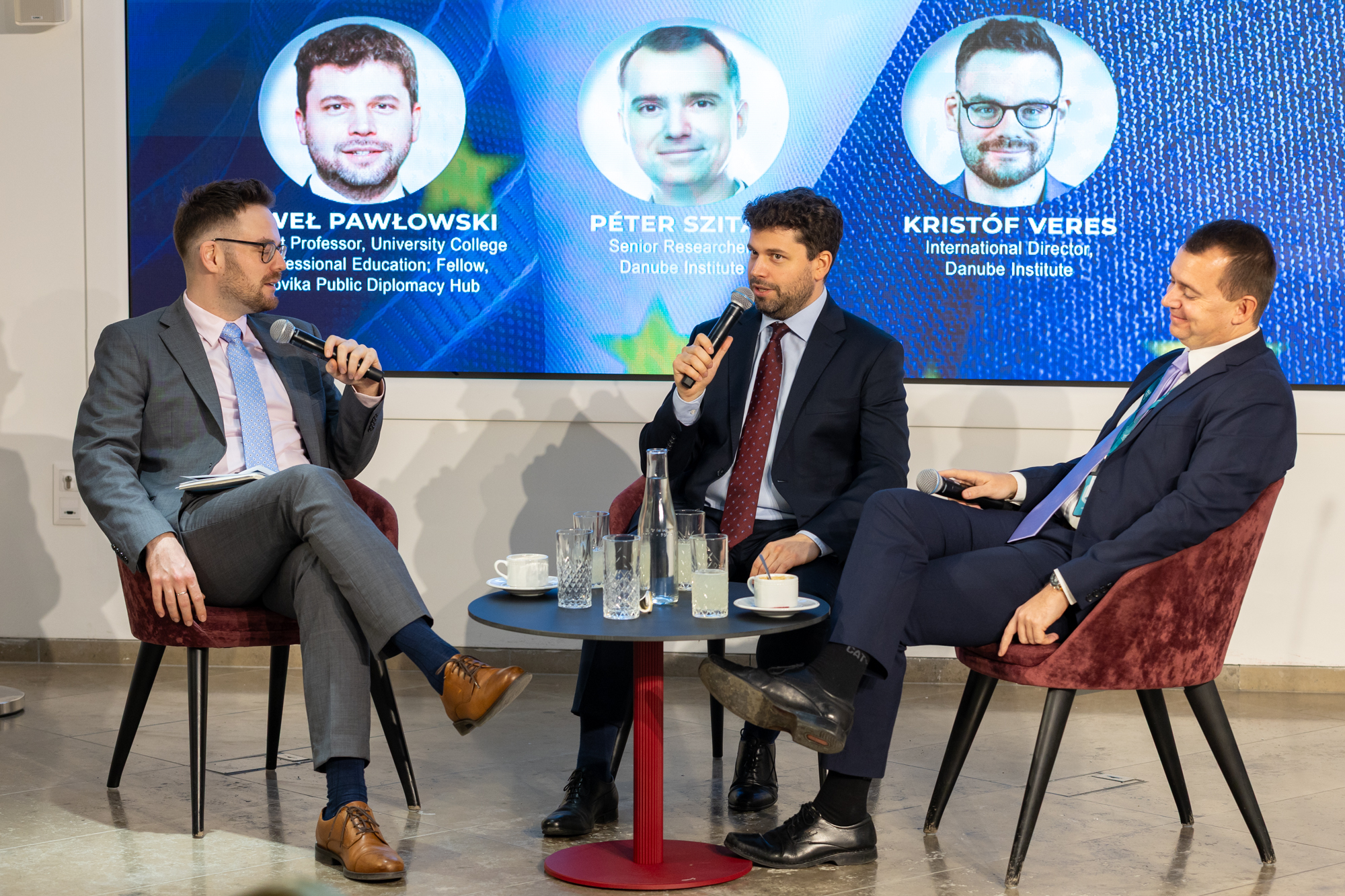
Dr. Paweł Pawłowski, Distinguished Fellow of the Ludovika Public Diplomacy Program, participated in a policy discussion co-organised by the Danube Institute and the Ludovika University of Public Service, titled From Warsaw to Budapest: Poland’s Strategy for Central European Unity. The event brought together policymakers and experts to reflect on the future of cooperation within the Visegrád Group in today’s changing European context.
Despite recent political differences and emerging challenges, the discussion underlined that the V4 framework remains an important instrument for Central European coordination and interest representation within the European Union. Participants agreed that regional cooperation, when grounded in shared interests rather than political symbolism, continues to offer strategic value.
Several speakers emphasized that the Visegrád Group is more than a symbolic alliance. In a period marked by energy uncertainty, security concerns, and shifting power dynamics in Brussels, regional coordination has regained practical relevance. Acting collectively enables Central European countries to strengthen their position in EU debates and balance the influence of larger member states on key policy issues.
From the Polish perspective, Dr. Pawłowski argued that the V4 should be understood primarily as a working platform for cooperation. He stressed that for Poland, the format provides concrete opportunities, particularly in the fields of energy security and infrastructure development. Strengthening north–south transport corridors, diversifying energy sources, and improving regional resilience were identified as areas where closer cooperation can deliver tangible results.
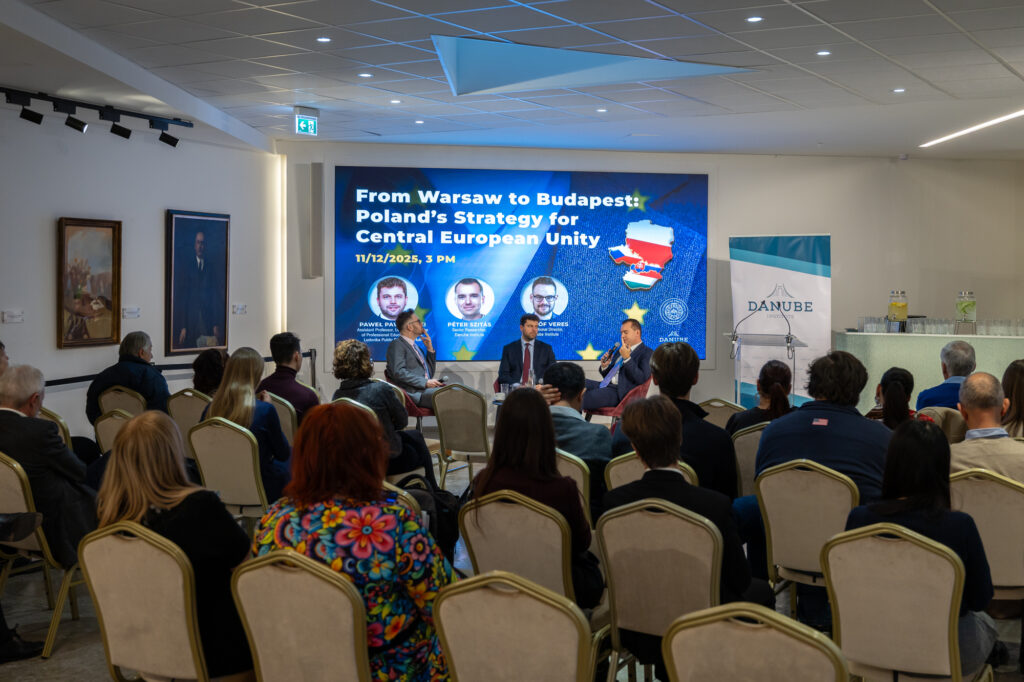
Representing the Hungarian viewpoint, Péter Szitás, Senior Research Fellow at the Danube Institute, highlighted that the real strength of the Visegrád Group lies in coordinated engagement with Brussels. According to him, issues such as migration, energy policy, and national sovereignty clearly demonstrate the need for regional alignment. When Central European states articulate common positions, they are better positioned to shape EU decision-making rather than merely react to it.
The overarching conclusion of the discussion was clear: Central Europe’s influence depends on its ability to act together. In a European Union undergoing significant transformation, renewed V4 cooperation offers not only strategic leverage, but also a credible framework for safeguarding regional interests while contributing constructively to the future of Europe.
Photos: Danube Institute
Text: Dorottya Balsai
