
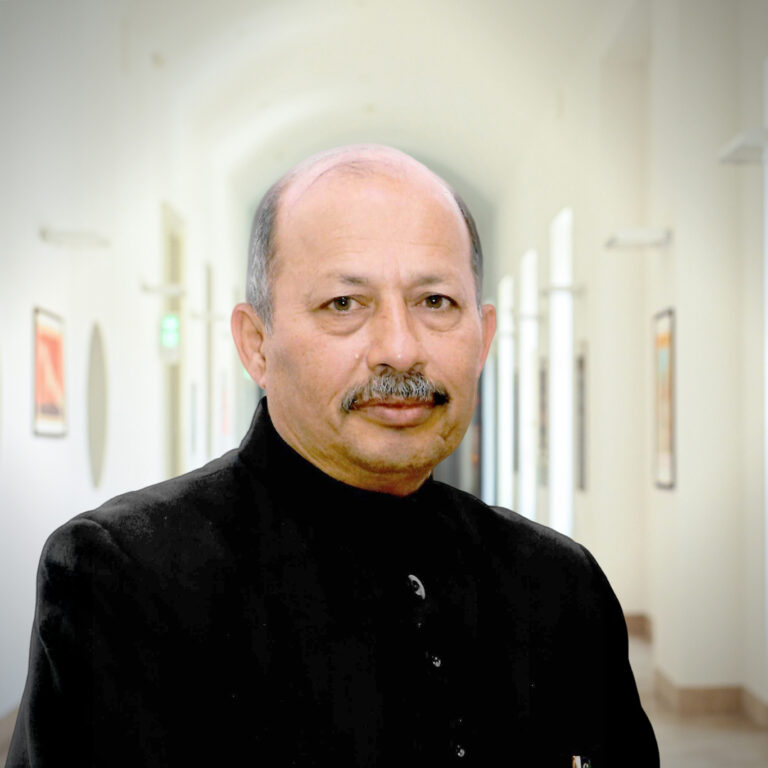
Amb. Mansoor Ahmad Khan
Director of Beaconhouse National University (BNU) Center for Policy Research (BCPR)
Biography
Mansoor Ahmad Khan was born on 1 September 1962 in Lahore, Pakistan, to Manzoor Ahmad Khan. He holds a B.Sc degree in Civil Engineering from the University of Engineering and Technology, Lahore, earned between 1980 and 1985, and later completed a Master’s degree in Diplomatic Studies at the University of Westminster in London during the academic year 1994–1995. Throughout a diplomatic career spanning more than thirty-three years, which concluded on 31 August 2022, he served the Government of Pakistan in numerous senior positions of strategic relevance to the country’s foreign policy and security dynamics. His principal areas of specialization include Afghanistan, regional engagements involving Pakistan, and matters related to nuclear policy and disarmament. In recognition of his diplomatic service in dangerous and challenging circumstances, he was conferred the civil award Sitara-e-Shujaat (Star of Bravery) on 23 March 2023. He is married and has three children, and resides in Islamabad, Pakistan.
Over the course of his diplomatic career, Mansoor Ahmad Khan held several high-level posts. From September 2020 to August 2022, he served as the Ambassador of Pakistan to Afghanistan in Kabul. During this period, he participated actively in the Afghan peace process in 2020 and 2021, contributing to progress in intra-Afghan negotiations and the implementation of the Doha Peace Agreement. He maintained continuous engagement with the government and leadership of the Islamic Republic of Afghanistan during 2020–2021, and after the Taliban takeover on 15 August 2021, he played a crucial role in assisting the international community with evacuation efforts and in responding to the formation of the Afghan interim government. He closely supervised the logistics of humanitarian assistance delivered to Afghanistan by donor countries and international humanitarian organizations through Pakistan. In his capacity as ambassador, he remained deeply involved with the Afghan interim government, Taliban leaders, Afghan political actors and the international community, advocating for an inclusive political framework that respects human rights and fulfills counter-terrorism obligations. He also pursued regional initiatives to promote trade, economic cooperation and connectivity through Afghanistan, including projects such as TAPI, CASA-1000 and the trans-Afghan railway.
Between July 2018 and August 2020, he served as the Ambassador of Pakistan to Austria and Slovakia, as well as the Permanent Representative to the United Nations and the IAEA in Vienna. In this role, he maintained close engagement with Austrian and Slovak institutions to strengthen bilateral relations and cooperation. He chaired the UN Commission on Narcotic Drugs (CND) for the year 2020 and successfully concluded the process of rescheduling certain cannabis-related psychotropic substances to facilitate their medical and scientific use. He remained actively involved with the IAEA on matters of nuclear energy and served as Alternate Governor on its Board of Governors for the 2018–2020 term. During this period, he also worked with several multilateral organizations including UNODC, UNIDO and ICMPD.
From December 2015 to June 2018, he was Director General for Afghanistan, Iran and Turkey at the Ministry of Foreign Affairs. In this capacity, he oversaw Pakistan’s relations with these three neighboring countries. Regarding Afghanistan, he was directly engaged in the Afghan peace process through bilateral frameworks such as APAPPS and regional platforms including the Heart of Asia process, the Moscow format, the 6+1 group and various trilateral discussions such as the Pakistan-Afghanistan-US track. In 2015–2016, he was closely involved in establishing the Quadrilateral Coordination Group (QCG) comprising the United States, China, Afghanistan and Pakistan, aimed at facilitating intra-Afghan political settlement. On Iran, he participated in various bilateral and regional negotiations, and he also guided numerous bilateral and regional initiatives related to Pakistan’s relations with Turkey, including high-level visits between heads of state and government.
From August 2012 to November 2015, he served as Deputy High Commissioner at the Pakistan High Commission in New Delhi, where he acted as the principal focal point for bilateral engagement with India’s Ministry of External Affairs. He took part in negotiations with the Indian government regarding trade normalization and regional economic connectivity, including within the SAARC framework. He handled consular matters, prisoner exchanges and the annual exchange of lists of nuclear installations and related confidence-building measures.
From January 2009 to July 2012, he served as Deputy Head of Mission at the Embassy of Pakistan in Kabul. He maintained close interaction with Afghan ministries, institutions and political leaders, and regularly participated in regional and international processes aimed at encouraging the Taliban to join the peace process toward a political settlement. He oversaw the political, economic and consular functions of the embassy, including visa matters for Afghan nationals, and supervised the work of Pakistan’s Consulates General in Kandahar, Jalalabad, Herat and Mazar-i-Sharif.
From August 2006 to December 2008, he served as Director Americas at the Ministry of Foreign Affairs, responsible for Pakistan’s relations with the United States, including high-level visits and congressional delegations, as well as relations with Canada and Latin American countries.
Between February 2003 and July 2006, he was First Secretary at Pakistan’s Permanent Mission to the United Nations in Geneva. His work encompassed human rights issues, including Pakistan’s interaction with the UN Human Rights Commission and the transition process toward the establishment of the Human Rights Council. He also covered humanitarian issues in cooperation with UNHCR, IOM and the ICRC.
From July 2000 to January 2003, he served as Deputy Director at the Ministry of Foreign Affairs in the UN and multilateral division. He took part in UN General Assembly sessions and committees and handled Pakistan’s relations with the Organization of Islamic Conference (OIC), coordinating participation in the OIC Summit in Doha and in several Foreign Ministers’ Conferences.
From December 1996 to June 2000, he served as Second Secretary at the Pakistan High Commission in Harare, Zimbabwe, where he promoted bilateral relations with Zimbabwe, Botswana, Zambia, Namibia and Angola, with particular focus on trade and economic cooperation, including trade fairs and business delegations.
From October 1994 to September 1995, he pursued his Master’s degree in Diplomatic Studies at the University of Westminster in London. Prior to that, from March 1994 to November 1996, he served as Assistant Director at the Ministry of Foreign Affairs in the Human Resource and Career Planning division, responsible for the human resource management and development of ministry personnel.
Between September 1993 and February 1994, he completed the Specialized Training Programme for diplomats after joining the Foreign Service of Pakistan. Before entering the foreign service, he worked from September 1990 to August 1993 in the Economic Affairs Division of the Government of Pakistan as Head of Section, managing projects under official development assistance from Sweden, Norway, Denmark and the Netherlands. From November 1989 to August 1990, he undertook the Common Training Program (17th CTP) for civil servants at the Civil Services Academy in Lahore.
Before joining government service, he worked as an engineer in the Irrigation Department of the Government of Punjab from February 1987 to October 1989, and in the private sector from mid-1985 to January 1987.